
 EVEREST LIVE
Thursday, May 10, 2001
From: Maurice Peret
 |
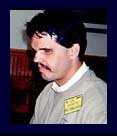
| Leo and Deryl Kelly are a father-and-son climbing team who are part of this Canadian Diabetes Association Expedition. |
Steven shared some of his experiences and challenges as a diabetic climber with me:
My name is Steven Kelly, and I am 24 years old. I am from Calgary, Alberta, Canada. I have had diabetes for about 22 years. I came up with my dad, brother, and a friend named Dave Rodney, who are climbing Mt. Everest. We had decided to use the exposure that we have gotten to help raise awareness for the Canadian Diabetes Association and for diabetes in general. The trek up to base camp we went very well and was a lot of fun. There were not too many problems but 15,000 feet above sea level was my magic number. At high altitudes food does not absorb in the body as quickly. That throws off the timing for the insulin, which I have to take. After 15,000 feet I have to change my regimen. Instead of taking a full dose of insulin with every meal, I have to take a half dose when I eat and then another half dose a couple of hours later after the food has begun to absorb.
As far as problems on the trek, amazingly enough, I haven't had any. In order to maintain control diabetics have to test our blood all of the time, every time we eat. We have to carefully monitor changes in our bodies. The problem with diabetes and altitude is that no one in North America lives more than 10,000 feet above sea level, so none of the meters that we use are equipped to go above that altitude. Right now I have with me three meters, of which two are virtually useless because they won't work. Above 10,000 feet they won't give me an accurate reading. The one meter that I am using is not particularly accurate, but so far it has been the one which has worked the most effectively. This was proved by the people at http://www.idea2000.com, who went to climb Acancagua last year and who found this meter to be the best for monitoring blood sugar levels.
Some of the things that have happened because I have had diabetes for so long are that I have developed retinal myopathy, spots on the blood vessels at the back of the eye, which is the number one cause of diabetic blindness. Now with much tighter control, I have managed more than in the past to reduce those spots: to make the ones that exist smaller and to prevent others from occurring. Other problems that can happen are that people with diabetes can lose the nerve endings in their fingers and toes due to bad circulation. Thankfully, because I've maintained control over it, I have not lost any of that semsation, and I hope that with even better management of my diabetes I will be able to feel and see my way until I am an old man.
For me personally, trekking to Everest base camp has been a real accomplishment because for a long time a lot of people said that, since you have diabetes, you can't do this or that. I got kind of tired of hearing that, even though for a long time I almost started to believe it. So when my dad came to me and presented this opportunity, I decided to ignore what those people had been saying, that I couldn't do this, and I decided to try it. If it didn't work, then fine. I would know that I couldn't do it. But for other diabetics it's one of those things that diabetes shouldn't prevent them from doing. It is not the end of everything. We can do whatever we want to just like Erik, who is showing that being blind doesn't mean he can't climb the highest mountain in the world.
Currently I am a student at St. Mary's College in Calgary studying sociology. I'm going for a Bachelor of Science degree. Where that takes me, I'm not really sure, but it should open doors for me somewhere along the line, and I hope to take advantage of whatever comes my way. Mt. Everest base camp is actually the second highest point that I've been to. I climbed Kalapatar, which is at 18,200 feet. It's just been an amazing experience. Now I think I'll go back home and relish this experience, use it to push myself to achieve other goals, and move on to the next challenge. I've tried trekking to Mt. Everest base camp, did well with that, and now I'm ready to try the next thing.
You guys are doing a great job at raising awareness about the National Federation of the Blind. We're trying to do the same with the Canadian Association of Diabetes. In the long run I hope as a result that people will see things a little more clearly and that we will all meet our objectives.
Many members of the National Federation of the Blind are diabetic and know intimately the challenges of living with and controlling the effects of diabetes. We are keenly interested in perfecting control of this disease and promoting scientific advances towards finding a cure for it. That is why we publish "The Voice of the Diabetic," a quarterly magazine devoted to the latest news about diabetes and positive information about managing the disease as a blind person. It is available from the National Federation of the Blind in print or on cassette tape. You can also get it online from our Web site: http://www.nfb.org. Helping and educating blind diabetics is also one of the reasons we are building the National Research and Training Institute for the Blind at our national headquarters in Baltimore, Maryland. To find out how you can help, contact us at The National Federation of the Blind 1800 Johnson Street Baltimore, Maryland 21230 or call: (410) 659-9314. Together with our friends, we are changing what it means to be blind.